
TL;DR: With 2026 Federal Reserve interest rate cuts rolling out, this guide breaks down how everyday workers can refinance high-interest debt to slash monthly payments and lock in long-term high-yield savings returns, the core focus of this guide covering debt refinance and HYSA strategies for low to middle-income earners.
Interest rate shifts led by the Federal Reserve reshape every household’s monthly budget, and the 2026 round of planned rate reductions creates a rare dual opportunity: cutting down expensive debt through refinancing while securing competitive yields on emergency and long-term savings.
Most average earners miss out on these financial wins because they do not separate debt reduction planning from savings growth, but simple, actionable steps let anyone take advantage of falling rates without advanced finance knowledge.
How Falling 2026 Fed Rates Make Debt Refinance Worth It For All Income Levels Using practical debt refinance and HYSA strategies for low to middle-income earners
The primary benefit of the 2026 Fed rate drop is lower borrowing costs across every type of consumer debt, from credit cards to home mortgages and personal consolidation loans.
When benchmark rates slide, lenders pass reduced interest charges to borrowers, which means refinancing existing balances can trim hundreds of dollars in annual interest fees. Applying tailored debt refinance and HYSA strategies for low to middle-income earners lets you target the highest-cost debts first for maximum savings.
Many low and mid-income workers carry credit card balances with APRs above 20%, a costly burden that grows larger with every passing month.
Refinancing this debt into a lower-rate personal loan or balance transfer card shrinks total interest owed, freeing up cash that can go toward savings or essential monthly bills.
If you hold a mortgage signed during the prior high-rate cycle, refinancing to a new lower-rate home loan can either cut your monthly payment or shorten your loan term to build home equity faster.
Even small percentage-point reductions translate to tens of thousands in long-term savings over a 15 or 30-year mortgage.
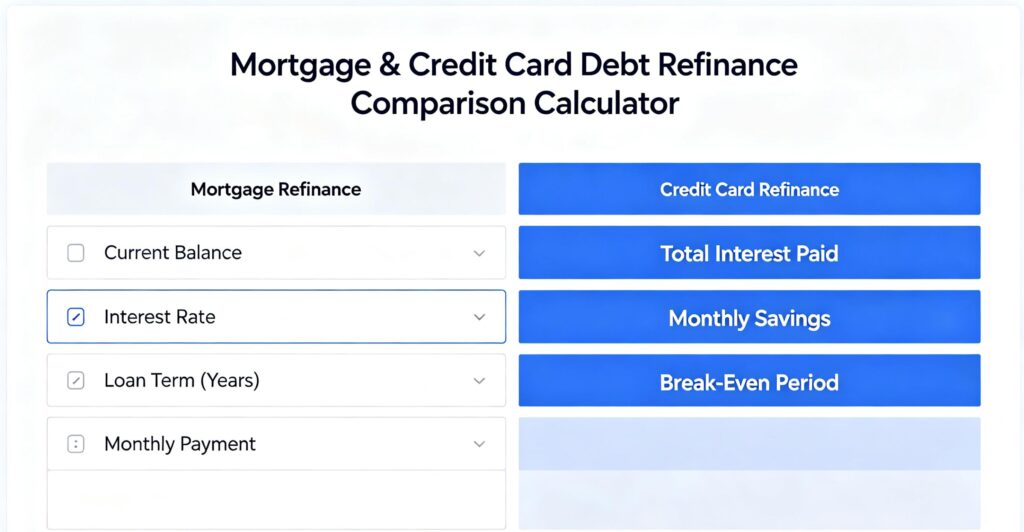
📊 free refinance savings calculator to measure your exact interest savings
This calculation step is non-negotiable before committing to any refinance offer, as closing costs and origination fees can erase potential savings if you do not run the numbers first.
Key Types of Debt to Refinance During 2026 Rate Cuts
- Credit Card Revolving Debt: High APR plastic balances are the top priority for refinance. Balance transfer cards with introductory 0% interest windows or fixed-rate consolidation loans eliminate compounding daily interest.
💰 NerdWallet’s step-by-step guide to consolidating high-cost credit card balances - Fixed-Rate & Adjustable Mortgages: Homeowners with loans issued in 2023–2025 qualify for meaningful monthly payment reductions once new lender rates align with Fed cuts.
💰 Federal Reserve official mortgage refinance comparison checklist - Personal & Auto Installment Loans: Vehicle loans and unsecured personal debt with rates above 8% can be swapped for new financing with significantly lower monthly minimums.
💰 Bankrate’s 2026 debt consolidation loan eligibility breakdown - Small Business Owner Loans: Side business or microenterprise debt can also be refinanced to free up operating cash flow for owners with consistent monthly revenue.
💰 Simple 6-step process to refinance mixed consumer and small business debt
How To Lock In High Savings Account Yields While Fed Rates Decline with reliable debt refinance and HYSA strategies for low to middle-income earners
While refinancing attacks your liabilities, building passive savings gains with high-yield deposit accounts protects your income against inflation and unexpected expenses.
Many savers make the mistake of keeping emergency cash in traditional zero-interest checking or basic savings accounts, leaving thousands of potential annual earnings on the table.
💰 Guide to Moving Emergency Funds Into HYSA During Fed Rate Cuts
High-yield savings accounts (HYSA) pay exponentially higher annual percentage yields than standard bank offerings, and opening one requires no minimum balance or complicated investment experience.
Even modest emergency funds of $3,000–$10,000 generate meaningful passive cash flow when stored in a top-tier HYSA before broader rate cuts fully take hold.
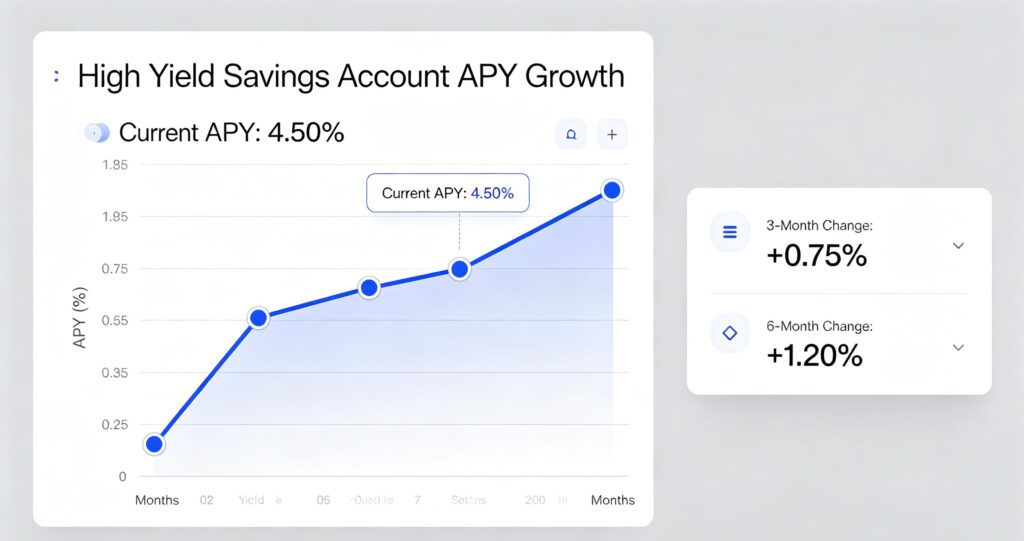
Timing matters for savings yield locking: as the Fed slashes benchmark rates, banks gradually reduce their advertised HYSA payouts over several months.
Savers who open accounts early in the 2026 cut cycle secure higher fixed introductory yields that last for 12–24 months, beating consumers who wait until rates hit bottom.
💰 Current top-rated FDIC-insured high-yield savings providers for 2026
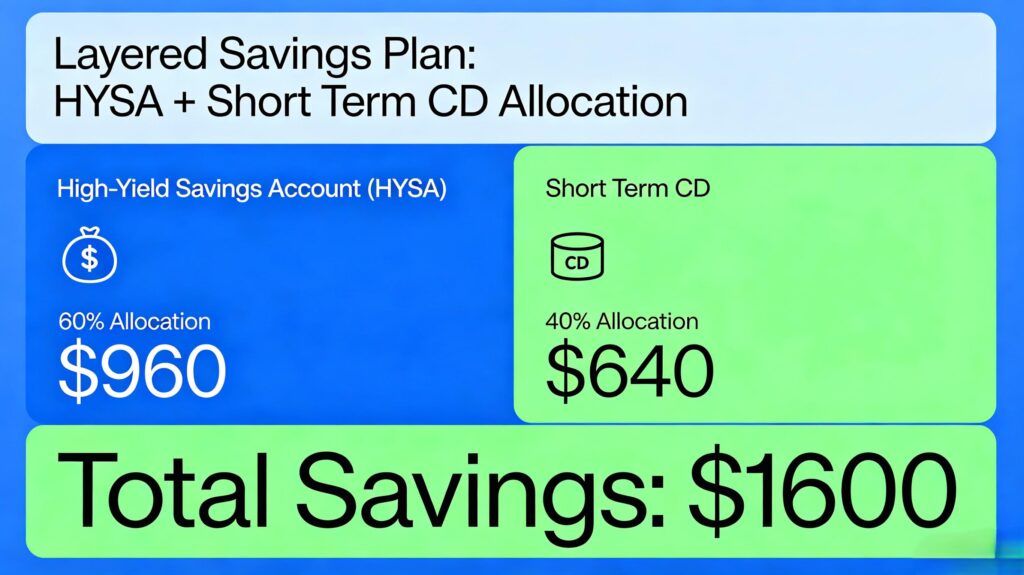
Short-term certificates of deposit (CDs) pair well with HYSAs for anyone who can set aside cash for 6–24 month terms.
CD yields often hold steady longer than liquid savings rates during Fed easing cycles, creating a layered savings strategy with both accessible emergency money and locked-in high returns.
💰 Bankrate’s comparison of liquid HYSA vs fixed-term CD yields post-rate cuts
Who Benefits Most From Combining Refinance + HYSA Strategies
This dual financial blueprint works for every wage bracket, but three groups see the largest net gains in 2026:
- Hourly low-income workers carrying revolving credit debt: Refinancing cuts minimum monthly bills, while HYSA interest builds a safety net to avoid future high-interest borrowing.
Applying straightforward debt refinance and HYSA strategies for low to middle-income earners keeps your budget predictable month after month. - Long-term homeowners with 2024–2025 high-rate mortgages: Mortgage refinance savings can be directly deposited into high-yield accounts for compound growth year over year.
- Freelancers and side hustle earners with irregular income: Consolidating scattered debt lowers fixed monthly outflows, and HYSA liquidity covers slow revenue months without dipping into long-term investments.
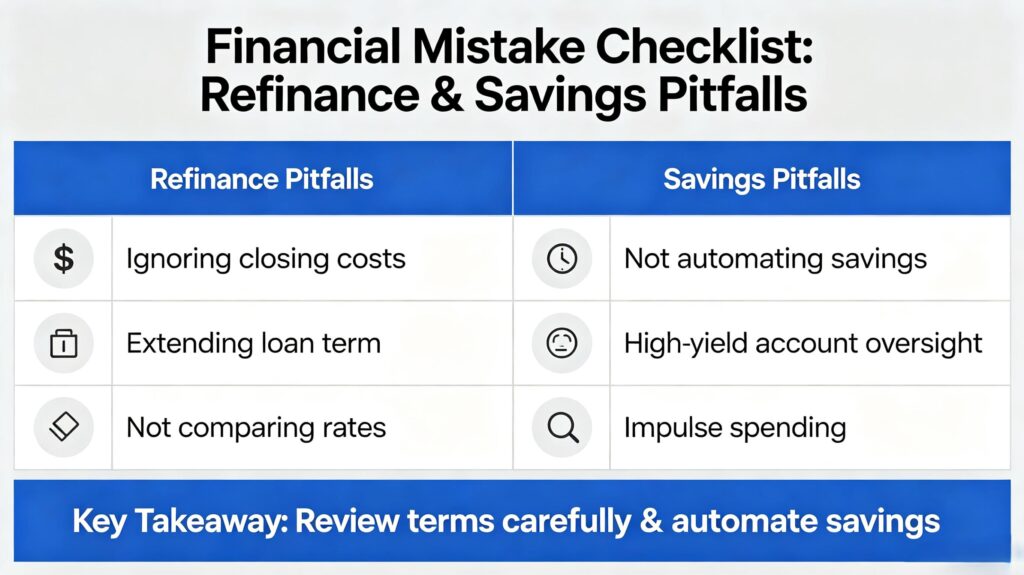
Common Refinance & HYSA Mistakes To Avoid In The 2026 Fed Cut Cycle
Many people rush into refinance applications or open random savings accounts without reviewing hidden costs, which erases all expected financial benefits.
The most widespread errors include:
- Ignoring closing fees and prepayment penalties for refinance loans: Always calculate the break-even timeline using a free online calculator before signing new debt contracts.
- Waiting too long to open high-yield savings accounts: Delays mean locking in lower APYs once banks adjust to sustained Fed rate reductions.
💰 Merrill Lynch analysis of Fed rate cut timeline impacts on consumer savings yields - Refinancing debt but continuing overspending: Lower monthly payments create breathing room, but redirecting freed cash toward savings is required to build lasting wealth.
- Choosing uninsured online savings platforms: Only FDIC-insured HYSAs guarantee full protection of your principal deposit, even if the financial institution faces instability.
💰 Independent financial breakdown of risk-free HYSA selection rules for 2026
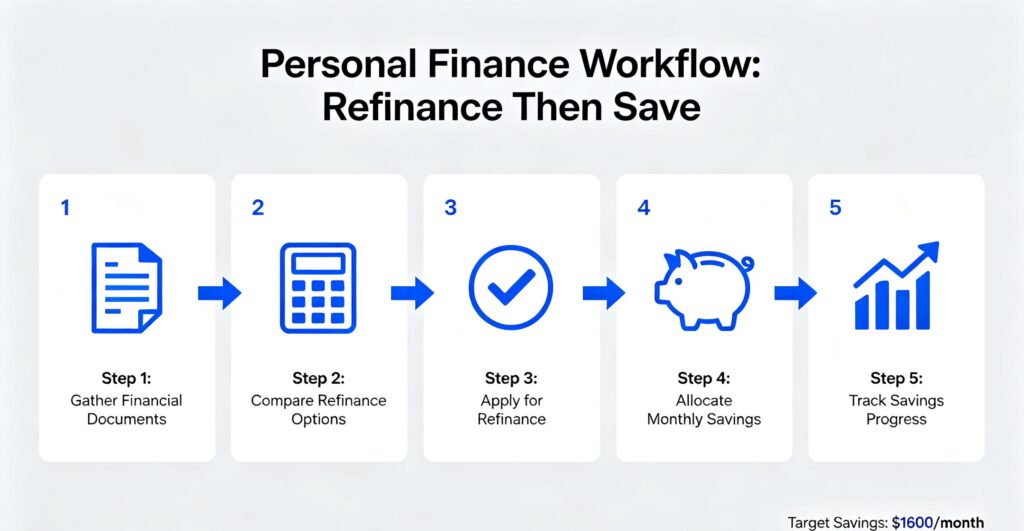
Step-by-Step 2026 Action Plan For Average Earners To Refinance Debt & Secure High Savings Yields
- Pull all outstanding debt statements: Compile credit card, mortgage, auto and personal loan balances, current APRs, and monthly minimum payments.
- Calculate potential refinance savings: Use a free online calculator to compare existing interest charges against new projected low-rate loan costs.
- Submit refinance applications to 2–3 competing lenders within a 14-day window to limit credit score impact.
- Once debt refinance closes, redirect all monthly interest savings into a dedicated high-yield savings account.
- Split savings into two buckets: liquid HYSA funds for emergency costs, and short-term CDs for surplus cash you will not touch for 6+ months.
Final Takeaways On 2026 Fed Rate Cuts, Debt Refinance, And High-Yield Savings
Falling interest rates in 2026 deliver a rare two-part financial opportunity built around debt refinance and HYSA growth, the core focus of this guide covering debt refinance and HYSA strategies for low to middle-income earners.
You do not need six-figure income or investment expertise to capitalize on this market shift; consistent small moves combining lower borrowing costs and higher passive savings returns generate compound financial gains over the next several years.
The key to long-term success is balancing liability reduction through strategic refinancing with asset growth via high-yield deposit accounts, rather than only focusing on one side of your personal balance sheet.
Every dollar saved on interest payments and earned through savings yields builds a stronger financial buffer against inflation, job loss, and unexpected household expenses.
Disclaimer: This article is for educational purposes only and does not constitute official financial advice. All interest rates, loan terms, and savings account yields referenced are subject to change based on individual lender policies, Federal Reserve adjustments, and personal credit profiles. Readers are encouraged to review all loan and banking terms independently before opening new accounts or refinancing existing debt.