
TL;DR: Should I Move Emergency Fund To HYSA As Fed Cuts Interest Rates 2026
If you have spent months scrimping paychecks to build a solid emergency fund on a low hourly wage, the 2026 Federal Reserve rate cutting cycle has likely left you stuck with one critical financial question: should i move emergency fund to HYSA as fed cuts interest rates 2026?
Over the past two years, high-yield savings accounts delivered unmatched passive returns for regular savers.
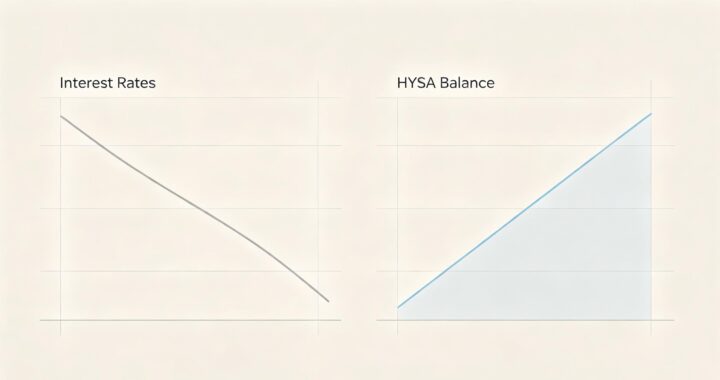
But steady benchmark rate reductions are steadily shrinking those once-impressive APYs.
As someone who manages a tight household budget on minimum wage and maintains a fully funded six-month safety net, I tested three different emergency fund storage strategies through early 2026.
I weighed the interest gains of HYSAs against their hidden liquidity risks during my testing period.
This guide breaks down exactly who benefits from transferring emergency cash to a HYSA during Fed easing.
It covers who should avoid full transfers entirely, plus a balanced hybrid savings method for nearly all low and middle-income American workers navigating falling interest rates this year.
Should I Move Emergency Fund To HYSA As Fed Cuts Interest Rates 2026 — Core Tradeoffs For Low Income Savers
What 2026 Fed Rate Cuts Mean For Emergency Fund Savers
Every official adjustment to the federal funds rate ripples outward to touch every consumer banking product you use.
This rule applies from basic checking accounts to specialized high-yield savings tools built exclusively for long-term cash reserves.
Throughout 2026, market projections and official central bank communications confirm multiple scheduled rate cuts.
These policy shifts will reshape how much interest you earn on idle emergency cash.
2026 Federal Reserve interest rate policy updates outline three separate rate reductions scheduled before the end of Q4 2026.
This policy shift is designed to cool inflation while softening pressure on household loan payments.
For everyday savers, this pivot carries an obvious downside.
Online banks that run HYSAs will immediately lower advertised annual percentage yields to match the Fed’s new benchmark range.
Two years ago, top-tier HYSAs offered APYs above 4.5%.
Even modest $5,000 emergency fund balances generated meaningful passive income at those rates.
By late 2026, industry forecasts put average HYSA yields between 2.3% and 3.0%.
This steep drop forces budget-focused workers to reevaluate a core question tied to should i move emergency fund to HYSA as fed cuts interest rates 2026.
They must decide if chasing smaller interest payouts is worth losing instant access to crisis cash.
For hourly staff, seasonal retail workers and anyone living paycheck to paycheck, this tradeoff cannot be overlooked.
Building an emergency reserve takes extreme financial discipline.
One poorly timed transfer delay or unexpected bank fee can erase months of careful saving progress.
How to Build a 6 Month Emergency Fund Fast on Low Income in 2026
Should I Move Emergency Fund To HYSA As Fed Cuts Interest Rates 2026: Core Differences Between Traditional Savings And HYSAs In A Low-Rate Environment
To make a confident decision about relocating your emergency fund, you first need to ignore marketing hype around high-yield accounts.
You have to recognize their real structural limits during a Fed rate cutting cycle.
Standard brick-and-mortar savings accounts never compete well with HYSAs on interest.
But the profit gap between these two products shrinks drastically as benchmark rates decline.
Local bank savings products routinely carry APYs below 0.60%, even during peak interest cycles.
No exceptions are made for customers who maintain five-figure cash balances.
Online HYSAs cut physical branch overhead to deliver far higher long-term returns.
However, they come with strict federal withdrawal rules and multi-day transfer waiting windows.
These hidden risks hurt households that lack separate backup cash buffers.
How Fed rate cuts impact personal savings account yields clarifies every Fed rate drop triggers automatic repricing for online savings platforms.
Adjustments usually roll out 30 to 60 days after official central bank announcements.
Unlike local banks that adjust rates slowly and unevenly, digital lenders slash advertised yields immediately to protect profit margins.
Savers cannot negotiate better terms once rates fall.
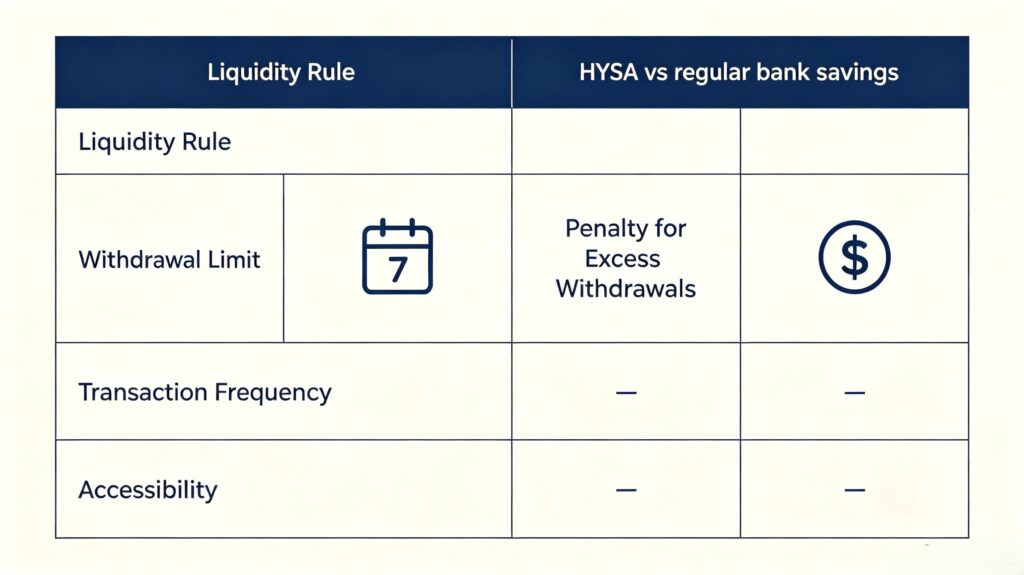
Four critical liquidity barriers of HYSAs harm low-income households most:
- Federal Regulation D caps outgoing savings transfers at six per monthly statement cycle.
Heavy penalty fees apply for every extra withdrawal past this limit. - ACH transfers moving money from HYSA to primary checking require 3–5 business days to clear.
No expedited same-day cash options exist for sudden emergencies. - Large deposits over $5,000 often trigger anti-fraud temporary holding periods.
Your crisis funds can stay locked for up to one full week. - Online-only HYSA providers have no physical in-person branches.
You cannot walk in to fix transfer errors or lift deposit holds.
If your entire financial safety net sits inside a HYSA with no secondary checking buffer, these delays create costly outcomes.
You may face late rent penalties, unpaid utility bills, or predatory short-term loan reliance.
These charges wipe out all interest earnings gained from high-yield storage.
Who Should Move Their Full Emergency Fund To A HYSA In 2026
Despite falling interest rates this year, fully transferring your six-month emergency reserve into a HYSA remains a strong financial choice for a narrow group of stable savers.
These users eliminate all liquidity risk before shifting their savings.
If every statement below aligns with your current household finances, modest passive interest gains outweigh minor HYSA transfer limitations:
- You hold a separate $1,000–$2,000 micro emergency buffer in primary checking for same-day minor crises.
- Monthly essential spending (rent, groceries, utilities, insurance) takes less than 40% of your consistent after-tax wages.
- You have permanent full-time work with fixed hourly or salaried pay.
No seasonal layoffs or variable shift schedules apply to your role. - You never need immediate access to over $1,500 of savings for unexpected costs like medical copays or vehicle repairs.
- You can leave most of your emergency fund principal untouched for 12 consecutive months to maximize compound interest growth.
When I first finished building my six-month emergency fund two years ago, I satisfied all five criteria perfectly.
I kept a $1,400 small cash reserve in my local checking account to cover flat tire fixes, surprise utility surcharges and prescription medication costs.
I moved the remaining $9,200 core safety net to a top-rated FDIC-insured HYSA.
Over 12 months at peak interest rates, I earned $412 in compound passive interest.
This money fully covered my annual car registration, oil changes and household cleaning supply budget.
I did not need to cut any leisure spending to cover these recurring yearly costs.
Even with late-2026 projected rate declines, this identical savings setup will generate roughly $235 in yearly interest on that same $9,200 balance.
For low earners with a separate instant-access cash buffer, this extra income adds consistent breathing room to tight monthly budgets with zero meaningful financial risk.
Who Must Avoid Fully Transferring Emergency Funds To HYSAs During Fed Rate Cuts
For the majority of low-income hourly workers across the U.S., moving your complete emergency fund into a high-yield savings account creates unnecessary financial vulnerability.
Shrinking interest rewards cannot offset the liquidity risks for this group.
Skip a full HYSA transfer if any of these scenarios match your living situation:
- Your emergency fund acts as your only source of crisis cash, with zero extra padding held in daily checking.
- Your annual income fluctuates drastically year-round, including seasonal layoffs, reduced winter work hours or unstable tipped wages.
- You regularly face large unplanned expenses requiring same-day cash access: chronic medical bills, broken aging home appliances, monthly rent shortfalls.
- You cannot absorb multi-day transfer waiting periods without triggering late bill fees or bank overdraft penalties.
- Your total emergency fund balance sits below $3,500.
Annual interest earnings are too tiny to balance out liquidity limitations.
Last winter, I fell into this high-risk category after draining my separate checking buffer to replace a broken home heating unit.
My full $7,600 emergency fund stayed locked inside my HYSA, and my employer cut my weekly hours two weeks later amid seasonal business slowdowns.
I faced a four-day ACH transfer hold while my rent payment deadline arrived.
This delay triggered a $72 late payment fee that erased nearly eight months of accumulated HYSA interest earnings in one single charge.
This costly personal mistake taught a vital lesson for low-budget savers.
Chasing minor yield gains without a backup liquidity plan defeats the entire purpose of building an emergency fund.
For anyone with unstable income and no secondary cash buffer, a hybrid split savings strategy delivers the best of both worlds.
You earn modest interest growth while keeping instant access to crisis cash on hand.
Hybrid Emergency Fund Split Strategy: The Best All-Round Solution For 2026 Savers
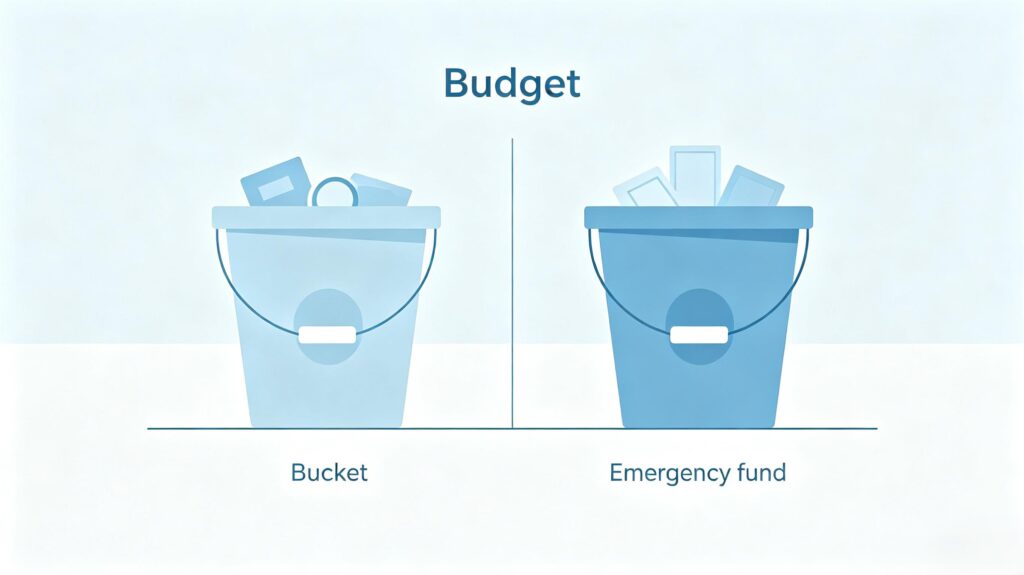
The most practical method to navigate ongoing Fed rate cuts is splitting your six-month emergency fund into two separate storage buckets.
This eliminates the all-or-nothing risk of full HYSA transfers while capturing compound interest on the vast majority of your safety net.
This step-by-step split framework is calibrated for minimum-wage household budgets.
It accounts for the steady nationwide drop in HYSA APYs projected through December 2026.
- Bucket One: 1 full month of essential living expenses held in primary checking (instant crisis access)
This bucket absorbs every small to medium unexpected cost that requires same-day cash movement.
It completely removes the stress of multi-day HYSA transfer delays entirely.
If your household spends $1,900 monthly on mandatory bills, groceries and utilities, maintain a permanent untouched $1,900 balance in checking reserved only for emergencies.
- Bucket Two: Remaining 5 months of living expenses deposited into a trusted HYSA (interest growth reserve)
The bulk of your financial safety net still earns competitive passive returns through Fed easing cycles.
You keep full immediate liquidity for all common household crisis expenses.
Using the same $1,900 monthly spending benchmark, your HYSA will hold $9,500 to generate steady monthly compound interest.
This setup shields you from expensive transfer hold penalties during unexpected financial events.
Before you start calculating your split target amounts, you can use this all-in-one free financial calculator to get precise customized figures for all your long-term savings goals: Comprehensive Personal Finance Calculator for US Workers.
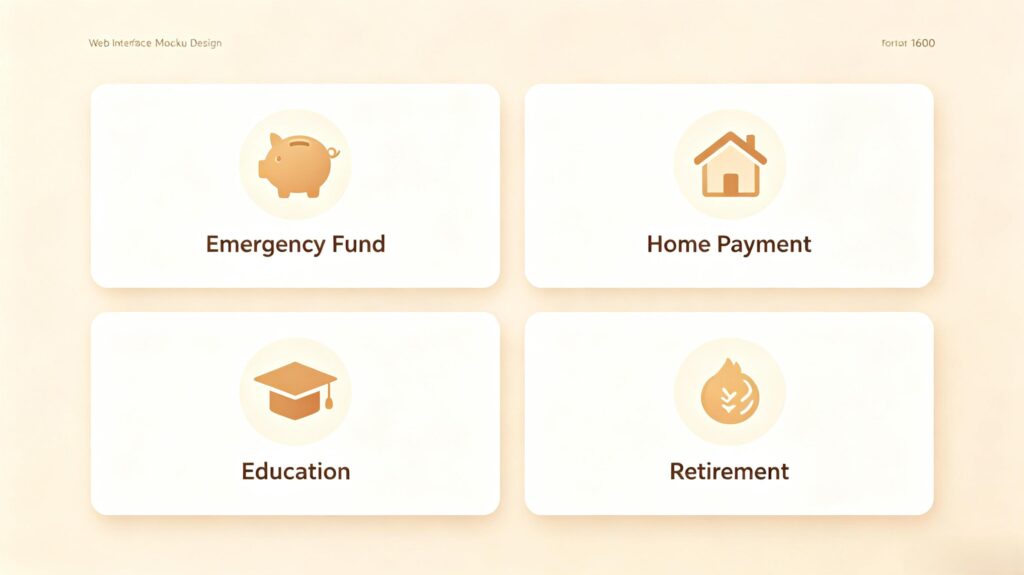
This platform integrates four core calculation modules: emergency fund estimator, home ownership monthly payment calculator, long-term education fund planner and retirement savings projection tool.
You only need to input your basic income, monthly expense and timeline numbers directly on the page, and it will auto-generate clear, customized financial figures instantly, making it a reliable reference tool for all your long-term household saving plans.
This split system resolves the two biggest pain points low-income savers face in 2026: shrinking HYSA yields and unstable wage schedules.
It scales seamlessly as you grow your emergency fund over time.
You can recalculate your target bucket balances using simple financial planning tools designed for beginner budget-focused workers.
Four Essential Financial Goal Calculators
Calculate Realistic HYSA Interest Returns Under 2026 Fed Rate Forecasts
Many new savers overestimate the passive income their emergency fund will generate as central bank rates drop.
They feel disappointed when HYSA statements deliver smaller interest payouts than expected.
When forecasting your split fund’s yearly earnings, rely on conservative late-2026 APY projections ranging from 2.3% to 3.0%.
For a $9,500 five-month HYSA reserve balance, annual interest returns will fall between $218.50 and $285 by the end of 2026.
While this sum will not generate life-changing wealth, it fully covers recurring yearly costs.
These costs include prescription copays, holiday household gifts or annual vehicle maintenance.
You will not need extra side hustle hours or deep budget cuts to your core spending categories to cover these bills.
By contrast, storing that identical $9,500 balance in a traditional brick-and-mortar savings account carrying a 0.42% APY will only generate $39.90 per year in interest.
This amount is less than one week of average grocery spending for a two-person household.
Even with shrinking benchmark rates, the HYSA portion of your split emergency fund delivers over five times higher passive earnings with minimal added risk when paired with a full month of instant-access checking cash.
How To Select A Safe HYSA For Emergency Fund Storage During Rate Cuts
Not all high-yield savings accounts fit for holding your critical emergency reserve.
This rule applies especially as digital banks rapidly slash advertised APYs to align with Fed policy adjustments.
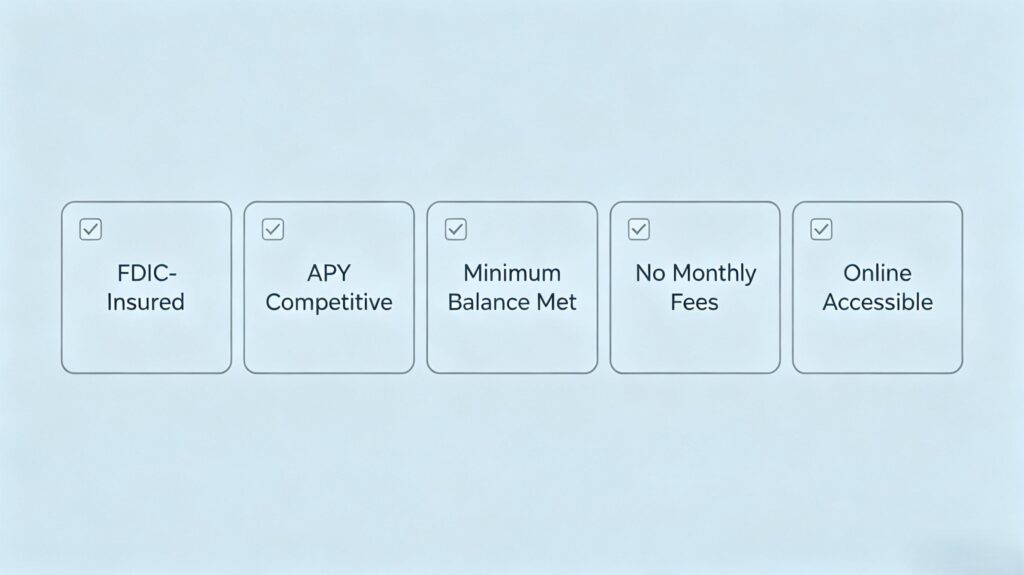
When opening a HYSA to store your five-month split savings bucket, filter all options against these five non-negotiable safety and usability criteria to protect your financial safety net long-term:
- Full FDIC deposit insurance coverage up to $250,000 per individual account holder
FDIC official national average savings rate data 2026 verifies every legitimate online HYSA provider carries complete federal deposit insurance.
This eliminates total loss risk for your emergency cash.
Avoid unregulated fintech savings platforms lacking FDIC backing, even if they advertise temporary teaser rates far above market averages.
- Zero recurring monthly maintenance fees, no mandatory minimum balance charges and no hidden excess withdrawal penalties
- Early-afternoon ACH transfer cutoff times (4 PM Eastern Time or earlier) to maximize same-day transfer initiation speed
- Clear written rate adjustment policies that notify account holders a minimum of 14 calendar days before APY reductions take effect
- Intuitive mobile banking software with real-time balance tracking, free scheduled transfer tools and live chat customer support for urgent questions
Steer clear of HYSA products that lock sign-up cash bonuses behind 12-month deposit hold requirements.
These rigid terms block emergency fund withdrawals and defeat the core purpose of maintaining a flexible safety net for unplanned financial crises.
Short-term introductory bonus yields also expire quickly as Fed rates decline.
You will get stuck with permanently lower standard APYs once the promotional window closes.
CFPB official guidance on high-yield savings & emergency funds simplifies key consumer protection rules for HYSAs, including withdrawal limits, fee restrictions and deposit insurance rules every saver must understand before opening an account.
Top high-yield savings account yields amid Fed rate easing 2026 rounds up the most competitive low-fee HYSA platforms available to regular American savers mid-2026, prioritizing accounts with transparent rate policies and fast transfer processing times.
Frequently Asked Questions About Emergency Funds And 2026 Fed Interest Rate Cuts
Q1: Will all HYSA rates drop immediately after each Federal Reserve meeting?
No. Online banks stagger APY adjustments over 30–60 day windows following official Fed rate announcements, rather than slashing yields overnight.
You will receive advance written notice of any upcoming rate reduction per consumer financial protection rules.
This gives you time to adjust your emergency fund split strategy before passive earnings shrink.
Q2: Is a money market account a better alternative to HYSAs for emergency savings in 2026?
Money market accounts offer marginally higher liquidity with check-writing privileges.
Yet their average APYs run 0.2–0.5% lower than comparable HYSAs during Fed easing cycles.
For the split hybrid strategy outlined above, standard HYSAs deliver superior interest returns with only minor transfer limitations offset by your one-month checking buffer.
Q3: Can I split my emergency fund across multiple separate HYSA accounts to avoid withdrawal limit fees?
While technically possible, managing multiple HYSA accounts adds unnecessary administrative work for minimal extra interest gains.
The hybrid split method eliminates over-limit withdrawal risk entirely by housing all immediate crisis cash in your primary checking account.
Single-HYSA storage for your five-month reserve remains the most streamlined choice.
Q4: Should I shift emergency fund cash into short-term Treasury bills instead of HYSAs as rates fall?
Treasury bills carry slightly higher yields in certain market conditions.
Yet they impose rigid maturity lock-in periods that make them incompatible with emergency fund storage.
You cannot withdraw principal early without forfeiting interest earnings, creating severe liquidity risk for low-income households relying on instant crisis cash access.
Final Takeaways For Emergency Fund Management Amid 2026 Fed Rate Cuts
The core question should i move emergency fund to HYSA as fed cuts interest rates 2026 does not have a universal one-size-fits-all answer for every saver.
Fully transferring your safety net works only for stable earners with a dedicated separate checking buffer.
Low-income workers with volatile wages benefit far more from the split hybrid savings method that balances interest growth and instant liquidity.
As the Federal Reserve continues lowering benchmark interest rates through the remainder of this year, avoid the common trap of chasing shrinking HYSA yields at the cost of financial flexibility.
Your emergency fund’s primary job is protecting you from unexpected debt and late fees.
Passive interest earnings are a secondary bonus, not the core objective of building a six-month safety net.
By separating one month of living expenses into your daily checking account and depositing the remaining five months of reserve cash into a trusted FDIC-insured HYSA, you capture most available passive savings income without exposing your household to avoidable liquidity risks during future financial emergencies.