

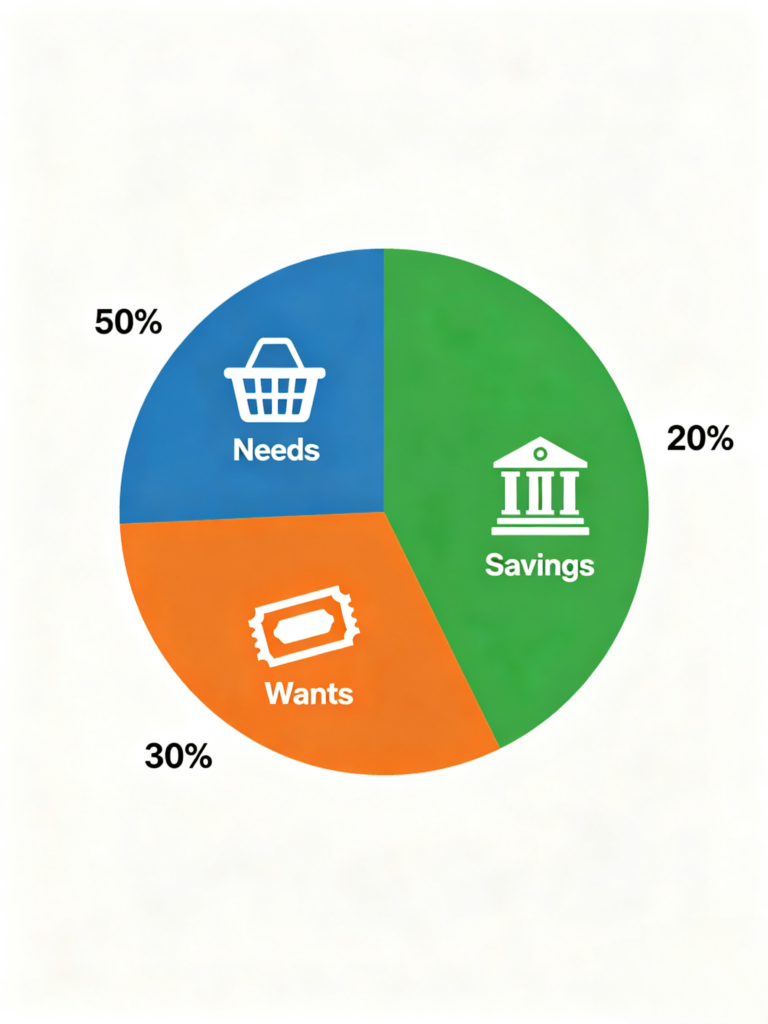
The 50/30/20 budget rule is an easy budgeting system for new savers in 2026. For this reason, it is one of the most searched personal finance topics every year. Unlike complicated budget apps or strict zero-based methods, this rule offers a simple structure that anyone can follow without prior financial experience.
Many new budgeters struggle with overspending because they lack a clear spending boundary. They mix essential bills, random shopping, and savings together. As a result, they end up broke before month’s end. The 50/30/20 budget rule solves this problem by splitting your after-tax income into three fixed categories.
Clear Breakdown of the 50/30/20 Budget Rule
The system divides your monthly take-home pay into three simple portions: 50% needs, 30% wants, and 20% savings or debt payoff. This balanced structure prevents burnout while steadily growing your financial security.
First, 50% of your income covers needs. Needs refer to unavoidable expenses you must pay to live normally. These costs include rent, mortgage, groceries, utility bills, transportation fuel, insurance, and essential medical costs. They are necessary and cannot be eliminated.
Second, 30% of your income goes toward wants. These are discretionary expenses that improve lifestyle but are not mandatory. They include dining out, coffee shops, streaming subscriptions, new clothes, weekend trips, hobbies, and entertainment. Reducing discretionary spending is the fastest way to free up monthly cash.
Third, 20% goes to savings and debt repayment. This portion builds your future financial safety. It covers emergency fund contributions, extra credit card payments, loan payoff, retirement savings, and investment deposits. This category determines whether you grow wealth or stay stuck living paycheck to paycheck.
Why This 50/30/20 Budget Method Works for Ordinary Beginners
Most strict budgeting systems fail for regular users because they are too rigid. In contrast, the 50/30/20 budget rule provides flexible limits. It does not require tracking every single transaction manually.
You do not need advanced tools or complicated setup. Even casual budgeters can follow this method successfully. If you currently use simple tracking apps, this three-category structure fits perfectly with automatic expense sorting.
How to Adjust Budget Ratio for Low or High Income in 2026
You can customize the ratio to match your real lifestyle. If your essential living cost is high, you can lower discretionary spending to 20% and push savings to 30%. If your living expenses are low, you can increase investment portions faster.
The core principle stays the same: separate mandatory needs, flexible lifestyle wants, and long-term wealth building.
Final Tips to Stick to This Budget Long-Term
The biggest budgeting mistake people make is mixing discretionary purchases with necessary costs. Always ask one simple question before buying: “Can I survive without this expense?”
If the answer is yes, it belongs to wants. If no, it belongs to needs. This easy check eliminates confusion and stops unconscious overspending every month.
When you consistently follow the 50/30/20 budget rule, you will gradually reduce wasteful spending, grow stable savings, and gain full control over your monthly cash flow.
Related: YNAB vs Mint: Which Budgeting App Saves You More Cash in 2026?
Reference: Consumer Financial Protection Bureau