
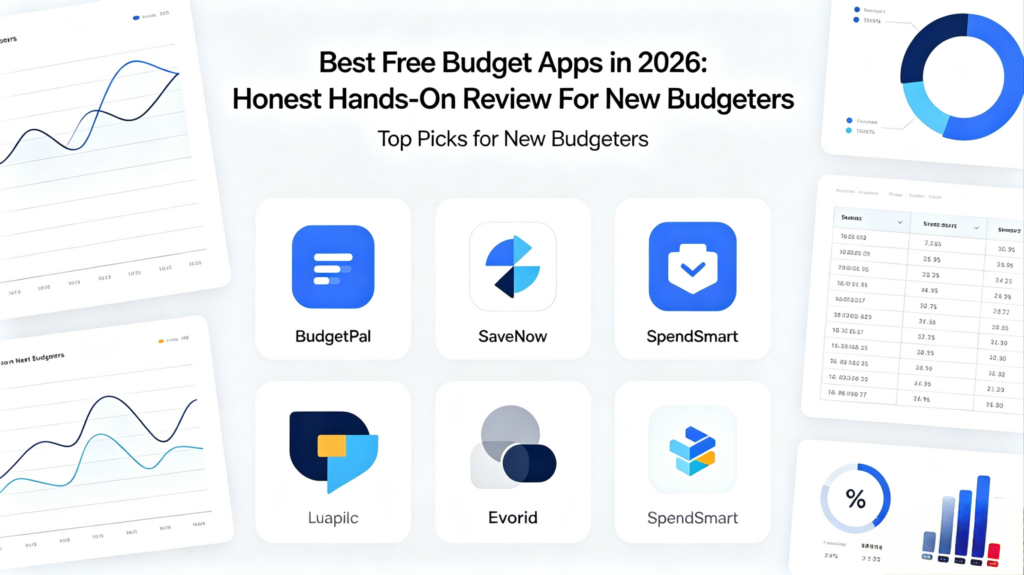
Have you ever checked your bank balance at month’s end? You may feel shocked about where all your hard-earned income went. For this reason, I spent nearly four full weeks testing a wide range of best free budget apps available in 2026.
To guarantee objective content, I turned down every sponsored cooperation and paid review offer from app developers. In fact, all content you’re reading comes from my real daily spending records and long-term hands-on testing, with zero biased paid recommendations.
Hidden Downsides of Popular Free Budget Apps in 2026
Most free budget tools use attractive “totally free” slogans to catch new users’ attention. However, many developers lock core practical features behind expensive premium subscriptions after users get familiar with basic functions.
Throughout my whole testing phase, I downloaded more than 15 popular free money tracking applications. Over half of these programs constantly pop up upgrade prompts. They hide custom budget planning, detailed monthly expense breakdown and automatic bank sync behind recurring monthly fees.
Worse still, several low-grade free budgeting tools cannot maintain stable bank connection. Unstable sync leads to missing transaction logs and messy expense data. This brings little value for users hoping to manage personal finances properly.
Top Free Budgeting Software | Best Free Budget Apps in 2026
Among all downloaded programs, two reliable free budgeting apps stand out for regular beginner users. Meanwhile, a few niche tools fit people with unique daily spending habits.
First up is YNAB, widely famous for its mature zero-based budgeting framework. Even its official free trial version delivers remarkable practical value for new budget builders. The core YNAB principle asks users to assign every incoming dollar into fixed spending groups ahead of consumption. This efficiently prevents unnecessary impulse purchases.
Beyond budget allocation rules, its bank sync performance beats most competing products. With the built-in tag system, users can quickly spot unused auto-renew subscriptions. They easily cut down extra recurring monthly costs with this feature.
If complex setup steps drain your patience, Mint stays the most user-friendly free option for casual budgeters in 2026. Backed by Intuit’s stable financial infrastructure, Mint automatically links checking accounts, credit cards and modest investment portfolios. It needs no manual data entry from your side.
The platform sorts daily expenses into groceries, transport, entertainment and regular bills automatically. It also sends instant spending alerts once your real cost hits preset budget limits. Best of all, all core expense tracking features remain permanently free, without hidden forced upgrade traps.
Common Pitfalls of Newly-Launched Free Budget Applications
I also tested dozens of newly debuted apps advertising lifelong full free access. Unfortunately, almost all these emerging tools block advanced financial reports behind paywalls once their 7-day free trial expires.
From my long-term testing experience, any budgeting platform promising overly flawless free benefits deserves careful inspection before long-term regular use.
How to Select Your Ideal Free Budget App for New Users
After this month-long practical trial, I truly believe the best free budget app never relies on fancy interface or exaggerated sign-up bonuses. Instead, a qualified money tracker matches your daily lifestyle, runs simply and lets you stick with consistent budgeting every day.
Whether you are a complete personal finance newbie or plan to replace outdated budget software, you can select your ideal tool based on unique spending preferences from my unbiased hands-on review.
Related: 7 Practical Money Saving Hacks to Cut Monthly Household Bills
Reference: Official YNAB Website | Official Mint Homepage