

If you want a secure future, you need to know how to plan your retirement savings early. Retirement is coming faster than you think. If you’re in your 40s to 60s, you may suddenly realize your savings are far from enough. Monthly bills, medical costs and daily expenses will not disappear after retirement. Yet your steady income will drop sharply. Many people keep delaying the plan, only to find the gap getting bigger and harder to fill.
Even if you are still in your 20s or 30s, don’t take retirement preparation lightly. The earlier you start, the less stress you will face years later. The good news is it’s never too late to take action. With the right steps below, you can build a solid retirement nest egg that fits your age and income. You can enjoy peace of mind in your later years.
Why Planning Your Retirement Feels Overwhelming
Many people put off retirement planning because it feels too abstract or too far away. Younger workers assume they have “plenty of time.” Those in their 40s and 50s may feel it’s “too late” to make a meaningful difference. The truth is, every age has its own advantages. Small, consistent choices add up to big results over time.
For those under 40, the biggest advantage is time. Even small monthly contributions, compounded over decades, can grow into a substantial fund. For those in their 40s to 60s, the advantage is often higher earning potential. They also have a clearer picture of their expected expenses. Both groups can benefit from a tailored plan that addresses their unique starting point.
Your Step-by-Step Plan by Age Group
In Your 20s and 30s: Build the Foundation
At this stage, retirement may seem like a distant concern. But the decisions you make now will shape your future. The goal here is to start habits that will carry you through the decades ahead.
- Start with a small, consistent contribution: Even 5% of your monthly income, invested in a low-cost index fund or retirement account, can grow significantly over 30+ years.
- Take advantage of employer matching: If your job offers a 401(k) or similar plan with a match, contribute at least enough to get the full match—it’s essentially free money.
- Keep debt low: High-interest debt like credit cards can eat away at your ability to save. Prioritize paying these off before increasing discretionary spending.
In Your 40s: Accelerate Your Savings
By your 40s, your career may be more stable. You likely have a better sense of your long-term financial goals. This is a critical decade to ramp up your efforts.
- Review and adjust your budget: Now is the time to cut non-essential expenses. Redirect more of your income toward retirement savings. Even an extra $200 or $300 per month can make a huge difference.
- Increase your contribution rate: Aim to save 15-20% of your income for retirement, if possible. Take advantage of catch-up contributions if available in your retirement accounts.
- Assess your risk tolerance: While you still have time for growth, consider gradually shifting some of your portfolio toward more stable investments. This will reduce volatility as you near retirement.
In Your 50s and Early 60s: Secure Your Nest Egg
If you’re in your 50s or early 60s, you’re in the home stretch. The focus here shifts from aggressive growth to preserving capital. You also need to ensure your savings will last.
- Max out catch-up contributions: Many retirement plans allow additional contributions for those aged 50 and older. Take full advantage of these to boost your savings.
- Create a realistic retirement budget: Estimate your monthly expenses in retirement, including healthcare costs, travel, and hobbies. Compare this to your expected income from pensions, Social Security, and savings.
- Pay down high-interest debt: Entering retirement debt-free will significantly reduce your monthly financial burden. It will allow your savings to stretch further.
- Consider delaying retirement if possible: Working just a few extra years can give your savings more time to grow. It will also reduce the number of years you’ll need to draw from them.
Key Tools to Help You Stay On Track
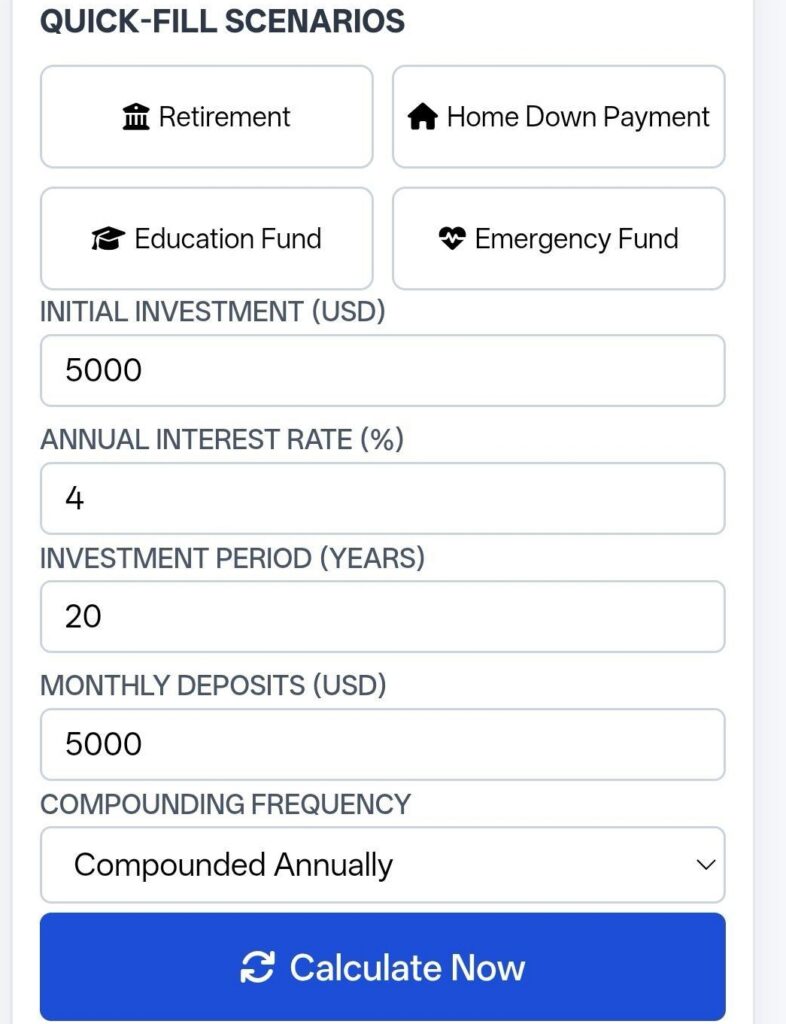
Planning for retirement doesn’t have to be guesswork. The right tools can help you estimate how much you’ll need. They can also track your progress and make adjustments along the way.
A retirement savings calculator is one of the most valuable tools you can use. It takes into account your current savings, expected contributions, rate of return, and retirement timeline. It shows you if you’re on track or need to adjust your plan. You can use the Retirement Savings Calculator on Calcfincepro.com to run quick, personalized scenarios. This will give you a clearer picture of your retirement outlook.
Another helpful tool is a budget tracker, which can help you see where your money is going. It can identify opportunities to save more. If you’re new to budgeting, the 50/30/20 Budget Rule is a simple framework to start with.
Common Mistakes to Avoid When Planning Retirement Savings
Even with the best intentions, many people make mistakes that derail their retirement plans. Here are a few to watch out for:
- Procrastination: Every year you delay saving means you’ll need to save more later to reach the same goal.
- Underestimating healthcare costs: Medical expenses are one of the biggest unknowns in retirement. Plan for these costs, including insurance premiums and out-of-pocket expenses.
- Taking too much or too little risk: Too much risk in your 50s could lead to significant losses right when you need your savings most. Too little risk in your 20s and 30s means you’ll miss out on the growth potential of compound interest.
- Relying solely on Social Security or pensions: These sources of income may not be enough to cover all your expenses. It’s important to have personal savings as a backup.
Final Thoughts on Your Retirement Plan
Retirement planning isn’t something you do once and forget about. It’s an ongoing process that evolves as your life changes. From getting married and having kids to changing careers or experiencing unexpected financial setbacks, many things can shift your plan. By reviewing your plan annually, adjusting your savings rate when possible, and staying focused on your long-term goals, you can build a retirement that feels secure, flexible, and fulfilling.
Remember, it’s never too early or too late to start. Whether you’re just beginning your career or counting down to retirement, the steps you take today will shape the quality of your life tomorrow. Take that first step—your future self will thank you.
For more tips on long-term financial planning and how to grow your savings over time, you can also explore resources from the Investopedia Retirement Guide to learn more about proven strategies for every stage of life.