
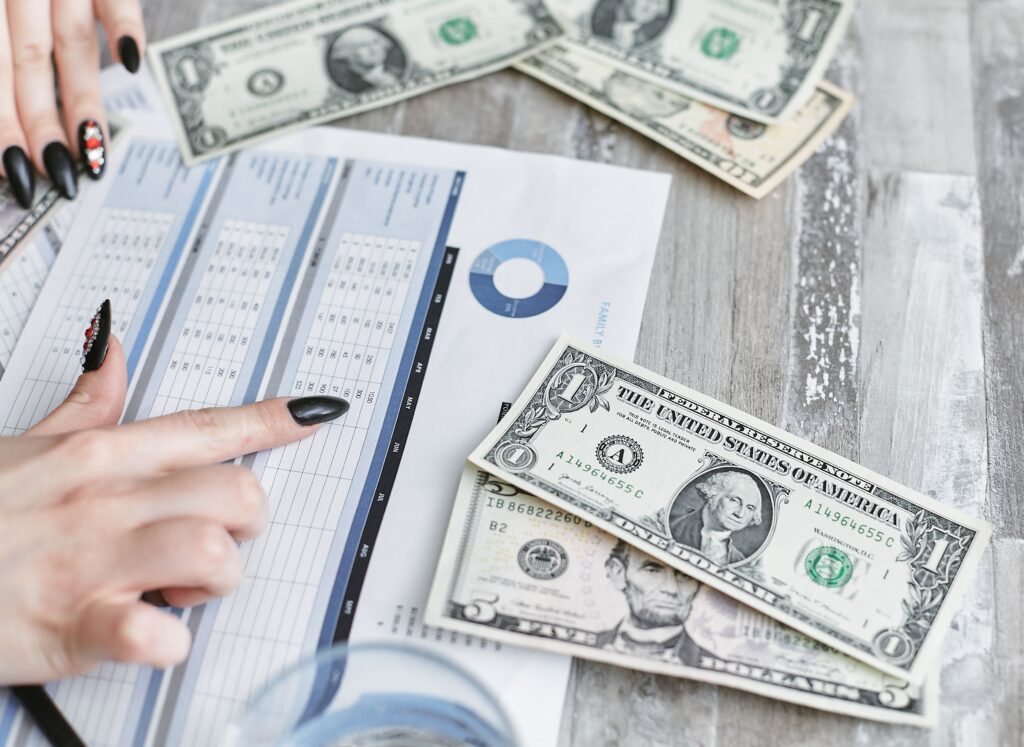
If you’re living paycheck to paycheck and struggling to save money low income no side hustle required, you’re not alone. Many people face this exact financial struggle, and I was once stuck in the same cycle, convinced big savings were only possible for high earners. Today I’m sharing how I saved $12,000 in one year on a modest salary—no overtime, no second job, and no need to give up every small joy in life.
Save money low income: My starting broke paycheck-to-paycheck routine
For context, I am single, renting a small apartment in a mid-cost city, and making $38,000 before taxes (about $30,500 after tax). My monthly take-home was roughly $2,540.
Here’s my typical month back then:
- Rent: $1,100
- Utilities + internet: $180
- Car payment + insurance: $450
- Groceries: $400
- Dining out/coffee: $300
- Subscriptions (streaming, gym, apps): $120
- Miscellaneous (shopping, gifts, random buys): $250
Total: $2,800/month.
At the time, I was negative $260 every month. I used credit cards to cover the gap, and my savings account had $87 in it. Meanwhile, I felt stuck, ashamed, and terrified of emergencies. That’s when I decided: I need a real plan, not just “spend less.”
My 3 non-negotiable rules (no side hustle required)
I didn’t get a raise. I didn’t drive Uber. I didn’t sell my clothes online. Instead, I only changed how I managed the money I already had. As a result, these three rules made all the difference:
1. Pay Myself First (Automated, Non-Negotiable)
To make this foolproof, I set up an automatic transfer of $500 per paycheck (every two weeks) to a separate high-yield savings account. I called it my “No Touch” account. The day I got paid, that money was gone before I could see it or spend it.
2. “Need vs. Want” Audit (1 Hour Every Sunday)
Every Sunday night, I spent 60 minutes going over my bank and credit card statements. I labeled every expense: Need (rent, food, gas) or Want (Uber Eats, new shoes, random Amazon buys).
At first, I was shocked: 40% of my spending was “wants” I didn’t even remember. However, I didn’t cut all wants—I just cut the mindless ones.
3. Fixed “Fun Money” (So I Wouldn’t Burn Out)
To avoid feeling deprived, I gave myself $150 per month in cash for anything I wanted: coffee, dinner with friends, a new book, a concert. Once it was gone, it was gone. Even better, this removed the guilt and made the plan sustainable.
You can also learn step-by-step ways to build a reliable emergency fund for unexpected bills.
The Result: $12,000 Saved in 12 Months
After 12 months, here’s what happened:
- Total saved: $12,047 (from $500 auto-save + small monthly wins)
- Credit card debt: $0 (paid off completely)
- Emergency fund: $10,000
- Vacation fund: $2,000 (took a small trip—no guilt)
Even today, I still make $38,000/year. I still rent the same apartment. I still drive the same car. The only difference? I control my money—my money doesn’t control me.
5 Actionable Tips You Can Start This Week
If you’re ready to stop living paycheck to paycheck and save money low income no side hustle needed, here’s exactly what to do:
- Open a separate savings account (high-yield if possible) and name it “Future Me.”
- Set up auto-transfer: $200–$500 per paycheck (start small if you need to).
- Do a 7-day spending log—write down every single dollar you spend.
- Cut 2–3 mindless subscriptions (most people waste $50–$100/month here).
- Give yourself a small “fun budget”—consistency beats perfection.
Final Thought: Your Income Doesn’t Define Your Future
You don’t need a six-figure salary. You don’t need a side hustle. You just need a simple system, consistency, and the courage to start.
If I could save $12,000 in a year on $38k—you can too. The best time to start was yesterday. The second best time? Right now.
If you want to check out more proven, in-depth saving strategies tailored strictly for low earners with no extra side income, you can refer to this well-researched matching guide published by NerdWallet for extra reference:
28 Proven Ways to Save Money



[…] How I Saved $12,000 in 1 Year on a Low Income (No Side Hustle)This guide shares real low-income saving routines to free up extra cash you can deposit to claim the IRS matching tax credit covered in the 2026 Low-Income Savings Tax Rules this year. […]
[…] How I Saved $12,000 in 1 Year on a Low Income (No Side Hustle)Stop Living Paycheck To Paycheck: 5 Low-Stress Budget Hacks For Average WorkersHow to Build a 6 Month Emergency Fund Fast on Low Income in 2026How to Plan Your Retirement Savings at Any Age […]