
TL;DR
If you work full-time on a minimum or low hourly wage in the US, Unclaimed Free Government Cash for Low-Income Workers 2026 EITC LIHEAP and More reveals thousands of dollars in unclaimed federal cash support that you never need to repay.
The biggest payout comes from the Earned Income Tax Credit (EITC), offering up to $7,830 for eligible households.
It pairs with LIHEAP monthly utility bill discounts, unpaid wage recovery funds and general unclaimed money databases.
Most low-income employees never apply for these benefits due to confusing eligibility rules and lack of clear guidance.
💸 Visit CalcfincePro to calculate your potential tax savings based on your household size and annual earnings.
💸 All working Americans can also cross-check every available federal benefit through the official national portal: https://www.benefits.gov/
Introduction
Stagnant hourly pay, rising rent, inflated grocery costs and expensive heating/cooling bills leave millions of low-wage US workers living paycheck to paycheck each year.
Many people cut discretionary spending, take exhausting side hustles or skip essential medical care just to cover basic monthly expenses.
They are unaware the federal government runs dozens of cash assistance programs designed exclusively for employed low earners.
Unlike loans, every benefit covered in this guide is free and requires no repayment.
These funds are open to full-time, part-time and seasonal staff who meet modest federal income limits.
In 2026, IRS data estimates over 24 million working households qualify for the EITC alone.
Yet roughly one in five eligible workers never submit a claim, leaving billions of dollars in unclaimed tax credits unused annually.
This breakdown covers the highest-value unclaimed cash programs for 2026.
We share step-by-step eligibility rules, application instructions, and official government tools to verify your qualification status instantly.
Unclaimed Free Government Cash for Low-Income Workers 2026 EITC LIHEAP and More: Top Federal Support Programs
Chapter 1: Earned Income Tax Credit (EITC) – Up To $7,830 One-Time Annual Cash Payout
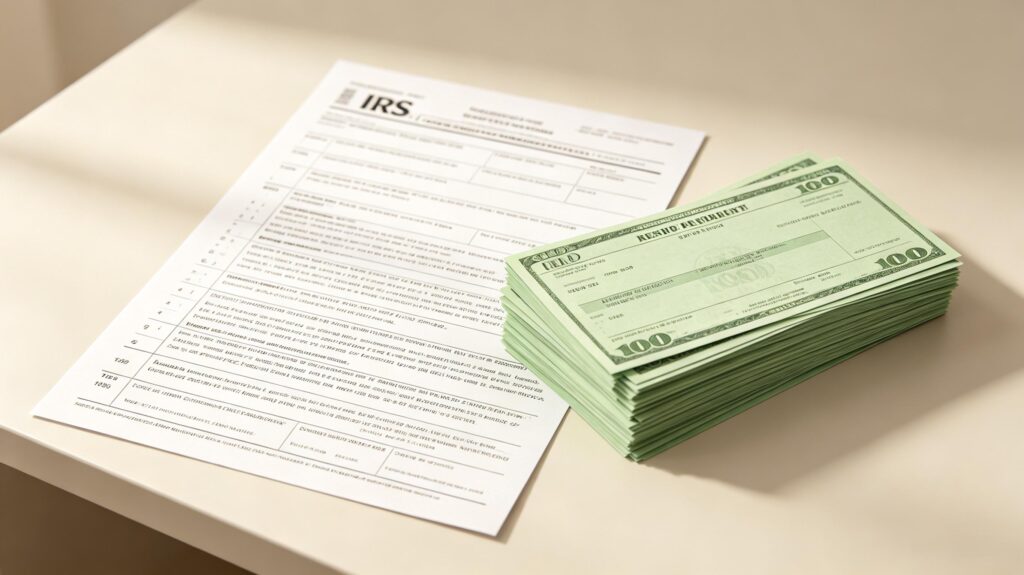
The EITC is the largest financial support program for low-income working Americans.
It distributes funds as a refundable tax credit when you file your yearly federal tax return.
Unlike standard tax deductions that only lower your taxable income, the EITC adds direct cash to your tax refund.
You can receive this refund even if you owe zero federal income tax for the year.
2026 EITC Maximum Benefit Breakdown By Household
- Single worker with no qualifying children: Max credit $633
- 1 qualifying child: Max credit $4,213
- 2 qualifying children: Max credit $6,960
- 3+ qualifying children: Max credit $7,830
Core Eligibility Rules 2026
- You must hold valid earned income from W-2 employment, self-employment or farm work. Passive investment income cannot qualify you.
- Your total adjusted gross income (AGI) must fall under federal caps. Limits range from $17,220 (single, no kids) to $63,398 (married filing jointly with three or more children).
- All family members must hold valid Social Security numbers for work purposes.
- Investment income for the tax year cannot exceed $11,600.
Official IRS Tools To Check & Claim Your EITC
💸 Read the full official IRS EITC program overview to confirm base requirements: https://www.irs.gov/credits-deductions/individuals/earned-income-tax-credit-eitc
💸 Use the IRS free eligibility assistant tool to instantly see if you qualify before filing taxes: https://www.irs.gov/credits-deductions/individuals/earned-income-tax-credit/use-the-eitc-assistant
💸 Access IRS Free File to submit your federal taxes at zero cost and automatically claim all eligible credits: https://www.irs.gov/freefile
Many low-wage workers skip the EITC because they assume they cannot afford tax preparation fees.
IRS Free File eliminates this barrier entirely, offering 100% free guided tax software for households with AGI under $79,000 per year.
The platform automatically scans your income and household details to calculate your full EITC payout with no extra charge.
Chapter 2: LIHEAP – Monthly Utility Bill Cash Relief For Low-Income Households
The Low Income Home Energy Assistance Program (LIHEAP) is run by the U.S. Department of Health and Human Services.
It delivers direct cash grants to cover heating, air conditioning, gas, electric and bulk fuel costs for low-earning working families.
Unlike EITC (a yearly tax credit), LIHEAP delivers recurring support during peak high-cost seasons.
This includes winter heating months and expensive summer cooling periods.
Key LIHEAP Details 2026
- Benefit value varies by state, climate and household size. Average annual grants fall between $300 and $1,200 per household.
- Eligibility ties to household income relative to federal poverty guidelines. Most states set caps at 150% to 200% of the federal poverty level.
- Priority approval is given to households with elderly members, disabled residents or young children.
- Funds can be applied directly to your utility account balance, or issued as a one-time check to cover past-due energy bills and prevent service disconnection.

💸 Review the official HHS LIHEAP fact sheet to learn national program standards: https://www.acf.hhs.gov/ocs/fact-sheet/liheap
Each state operates its own LIHEAP local office, with unique application windows and benefit amounts.
The national HHS overview page outlines how to locate your state’s administering agency, required documentation and annual application opening dates.
Chapter 3: Recover Unclaimed Federal Cash: Unclaimed Money Databases & Unpaid Wage Claims
Two separate federal systems hold billions in forgotten cash that low-income workers frequently overlook.
These include the national unclaimed money registry, and the Department of Labor’s unpaid wage recovery program.
Neither program requires repayment, and all recovered funds belong fully to you once your identity is verified.
3.1 USAGov National Unclaimed Money Database
State treasuries, federal agencies, banks and insurance companies turn over abandoned assets to federal oversight after several years of inactivity.
Eligible unclaimed funds include:
- Old payroll checks never cashed by employers
- Abandoned savings and checking account balances
- Unclaimed insurance policy payouts
- Forgotten tax refunds from past filing years

💸 Search the official USAGov unclaimed money hub to locate assets linked to your name and past addresses: https://www.usa.gov/unclaimed-money
Searches are completely free, with no third-party processing fees to claim your funds.
Scammers often charge money to run identical searches, so always use the official .gov portal to avoid fraud.
3.2 DOL Unpaid Wage & Back Pay Recovery
If your past or current employer violated federal minimum wage rules, withheld overtime pay illegally, or failed to issue final paychecks upon termination, the U.S. Department of Labor’s Wage and Hour Division can recover all owed wages on your behalf at no cost.
Recovered back pay counts as tax-free unclaimed cash assistance for many low-income filers.
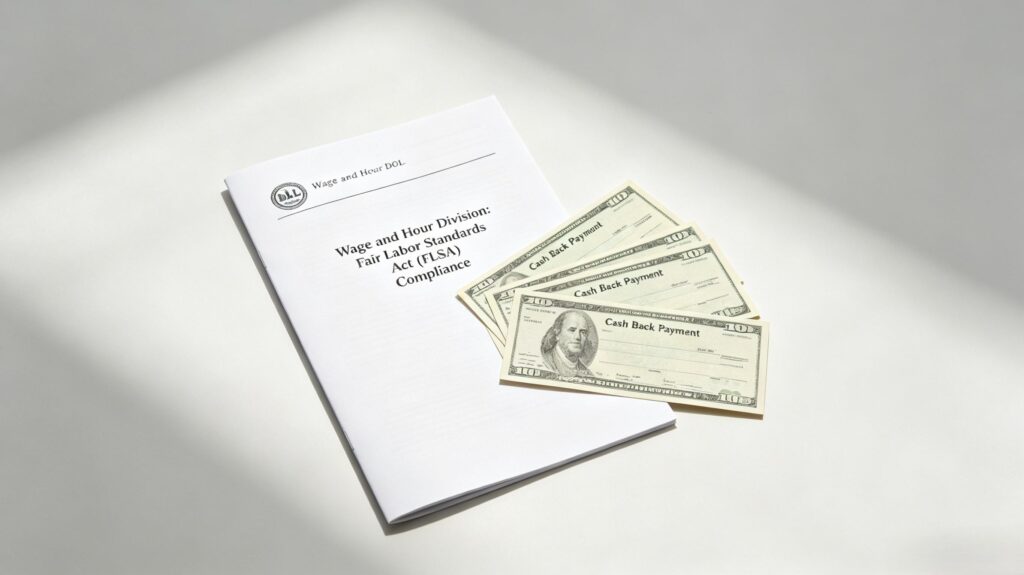
💸 File an unpaid wage inquiry or formal claim through the official DOL portal: https://www.dol.gov/agencies/whd/wow
Common violations eligible for recovery include unpaid time-and-a-half overtime, tipped worker wage theft, improper payroll deductions and failure to pay the federal $7.25 minimum hourly wage.
DOL investigations carry no legal fees, and recovered wages are sent directly to you once the employer’s liability is confirmed.
Chapter 4: How To Maximize All Unclaimed Federal Cash Benefits In One Year
Most low-wage workers only apply for one support program and miss overlapping eligibility for multiple grants and credits.
Follow this step-by-step order to capture every dollar you qualify for in 2026:
- At tax season: Use IRS Free File to claim your full EITC refund automatically. Cross-reference your household income with the CalcfincePro tax savings calculator to confirm you have not missed smaller complementary credits like the Child Tax Credit.
- Before winter/summer utility peaks: Submit a LIHEAP application through your state’s local office to lock in energy bill discounts before funding runs out (many states exhaust annual LIHEAP grants by mid-winter).
- Quarterly unclaimed asset check: Run a search on the USAGov unclaimed money database using every past address you have lived in over the last 10 years.
- Immediately upon wage theft suspicion: Submit a DOL unpaid wage claim instead of waiting months or years; recovery timelines shorten significantly when claims are filed close to the violation date.
- Cross-reference all eligibility through Benefits.gov: The national portal filters every federal, state and local benefit program matching your income, family makeup and location to reveal niche cash support you would not otherwise discover.

Chapter 5: Frequently Asked Questions (FAQ)
Q1: What is the biggest source of Unclaimed Free Government Cash for Low-Income Workers 2026 EITC LIHEAP and More?
A: The EITC refundable tax credit delivers the largest single cash payout for eligible low-wage full-time workers.
It pairs with recurring LIHEAP energy relief and forgotten unclaimed federal asset funds. You can stack all three streams of financial support without eligibility conflicts.
Q2: Can I claim EITC and LIHEAP benefits at the same time in 2026?
A: Yes, the two programs operate under separate federal departments with no overlapping eligibility restrictions.
Receiving LIHEAP utility relief does not reduce your EITC tax credit value.
Claiming EITC will not disqualify you from energy assistance grants. Low-income households commonly stack both forms of cash support to cut monthly living costs drastically.
Q3: Do I need perfect credit to apply for any of these unclaimed government cash programs?
A: No credit check is required for EITC, LIHEAP, unpaid wage recovery or unclaimed money claims.
Federal cash assistance for working low earners is based solely on your employment income and household composition.
There are zero credit score requirements or background financial reviews.
Q4: Will claiming these benefits raise my annual taxable income for future tax years?
A: EITC refundable credits, LIHEAP utility grants and recovered unpaid wages are not counted as taxable gross income by the IRS for the following tax filing cycles.
The cash support does not push you into a higher tax bracket or reduce eligibility for future benefit applications.
Q5: What documentation do I need to submit all applications?
Standard required paperwork across every program includes: valid photo ID, Social Security cards for all household members, recent W-2 pay stubs or tax returns, proof of current residential address, and utility account numbers for LIHEAP submissions.
Each official .gov portal lists a full document checklist before you begin your application to avoid delays.
💸 If you want long-term strategies to stretch your income further after claiming federal cash benefits, read our complete guide for low earners cutting daily expenses and growing leftover savings: https://savelyfi.com/low-earners-cut-costs-boost-savings/
Conclusion
Unclaimed Free Government Cash for Low-Income Workers 2026 EITC LIHEAP and More covers every no-repayment federal benefit low earners commonly overlook each tax year.
Tens of billions of dollars in unclaimed federal cash assistance sit unused each year.
This waste happens simply because low-income working Americans lack clear, centralized guidance on how to access these no-repayment benefits.
The EITC delivers the largest single payout of up to $7,830 for eligible families.
LIHEAP slashes recurring utility bills, and unclaimed money/wage recovery programs unlock forgotten funds owed directly to you.
All tools and application links shared in this article are official federal .gov resources with zero hidden fees or third-party charges.
Prioritize cross-checking your eligibility through Benefits.gov first to map every matching program.
Then follow the ordered application workflow to maximize your total cash support for 2026.
Pair these government grants with intentional cost-cutting habits to break the paycheck-to-paycheck cycle.
You will be able to build stable emergency savings even on a low hourly wage.
Disclaimer
All federal benefit rules, income limits and grant amounts referenced in this article apply exclusively to the 2026 tax and fiscal year.
Policy adjustments may occur at state and federal levels after publication.
We are not licensed tax attorneys, CPAs or official government representatives.
All program eligibility verifications, tax filings and benefit applications must be completed via official .gov federal portals to confirm individual qualification.
This content is for general educational guidance only and does not constitute official financial, tax or legal advice.
Savelyfi and CalcfincePro accept no liability for financial outcomes resulting from reader self-submitted government benefit claims.