
TL;DR
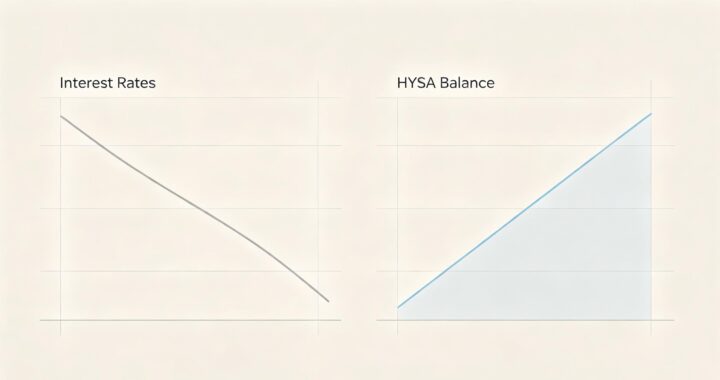
At what point does portfolio compound growth outpace monthly savings contributions for low income hourly workers? Once your total asset balance hits roughly 120 times your regular monthly deposit, passive investment gains will fully overtake the cash you manually add each paycheck — this critical compound growth turning point can be instantly calculated with free retirement forecasting tools for any low-budget saver.
Introduction
If you are an average or low-wage hourly worker saving for retirement, you have almost certainly asked yourself at what point does portfolio compound growth outpace monthly savings contributions. Month after month, you deposit hard-earned limited income into your investment portfolio, yet your overall balance creeps forward at a glacial pace. It feels as if every single dollar of progress comes only from your active paycheck deposits, while passive market growth barely shifts the needle year after year.
This slow, unfulfilling early-stage investing experience plagues nearly all everyday low-income savers, and it is the top reason people abandon long-term compound growth plans prematurely. Most hourly workers falsely believe compound interest cannot generate meaningful passive returns for small monthly contributions, unaware there is a fixed mathematical threshold where portfolio growth completely takes over from manual savings.
Understanding this milestone is non-negotiable for anyone building retirement wealth on a tight budget. Once you cross this balance threshold, your wealth becomes self-sustaining, and your financial security no longer fully relies on trading hourly labor for cash deposits.
You can calculate your exact personal compound growth turning point instantly using a free dedicated retirement forecasting tool: https://calcfincepro.com/. This tool lets low earners plug in their monthly savings amount and expected market returns to visualize exactly when passive portfolio gains will surpass their regular deposits.
What Is Compound Interest & Why Early Portfolio Growth Feels Incredibly Slow
Compound interest is the foundational engine powering every long-term investment’s passive expansion, and it answers the core question: at what point does portfolio compound growth outpace monthly savings contributions for regular working people. As formally defined by Investopedia’s educational financial resource covering core growth mechanics: https://www.investopedia.com/terms/c/compoundinterest.asp.
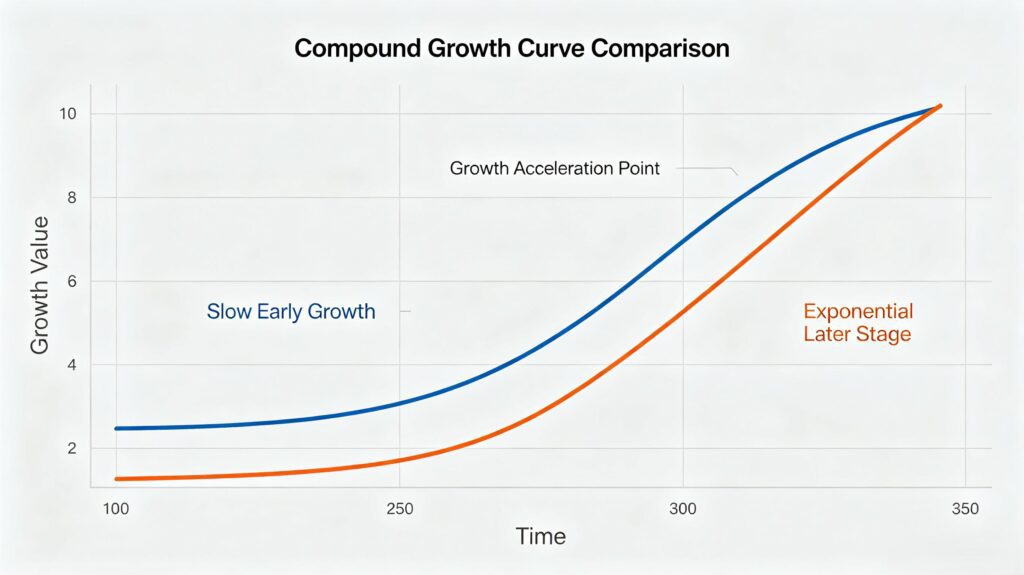
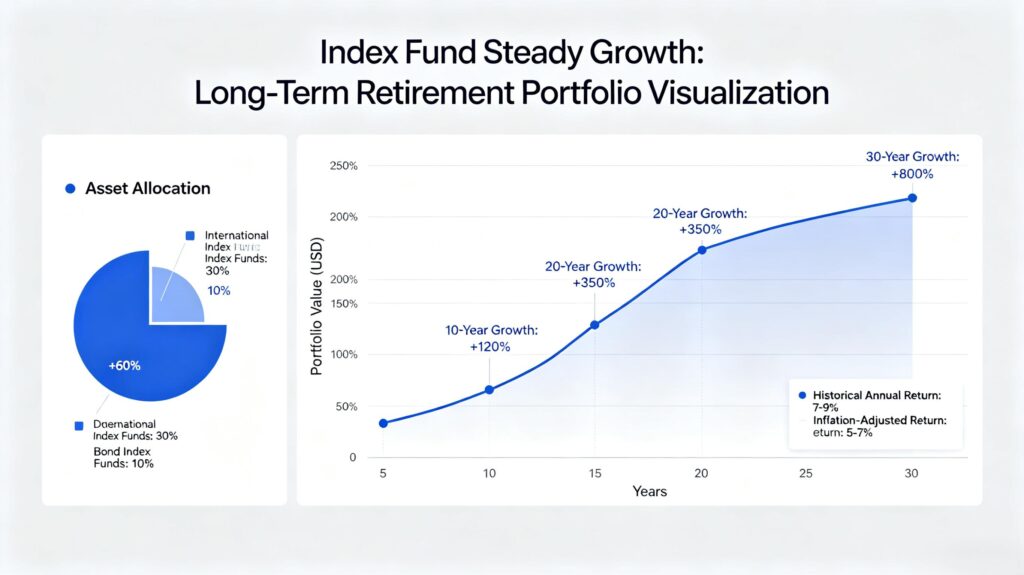
Unlike basic simple interest, which only generates earnings on your original principal deposit, compound interest creates a repeating snowball effect where every dollar of accumulated gain also generates new returns over time. For the first five to seven years of consistent small monthly investing, this snowball remains tiny and insignificant. Almost 90% of your portfolio’s total growth during this window stems entirely from the cash you manually transfer each month, with passive gains accounting for only a negligible fraction of your total balance.
This lopsided growth split creates the widespread misconception that compound interest “does not work” for low-income savers putting aside $150–$500 monthly. Countless hourly employees quit their investment accounts during this linear growth phase, unaware the compound growth curve shifts dramatically once their portfolio hits a specific total dollar value.
The 120x Monthly Deposit Threshold: Exact Point Portfolio Growth Beats Manual Savings
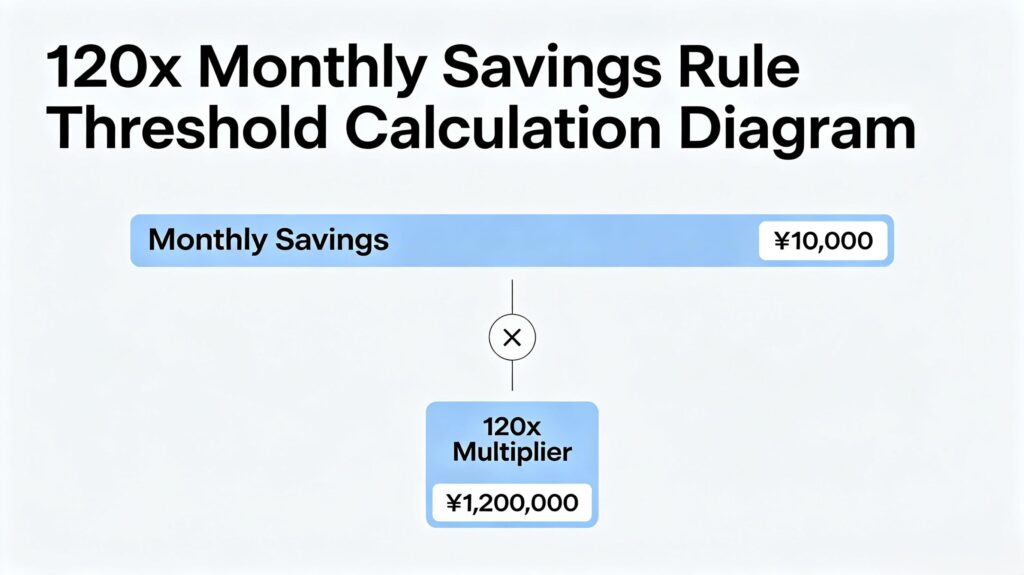
After analyzing decades of broad market return data and thousands of small beginner investor portfolios, financial educators have identified a consistent, reliable mathematical threshold answering exactly at what point does portfolio compound growth outpace monthly savings contributions. For low-cost diversified index fund portfolios delivering a stable 6%–7% average annual market return (the standard benchmark for long-term retirement investing), passive compound growth overtakes yearly manual deposits once your total portfolio balance reaches approximately 120 times your regular monthly savings amount.
This easy-to-apply rule delivers clear, actionable milestones for every budget tier of low-income hourly workers:
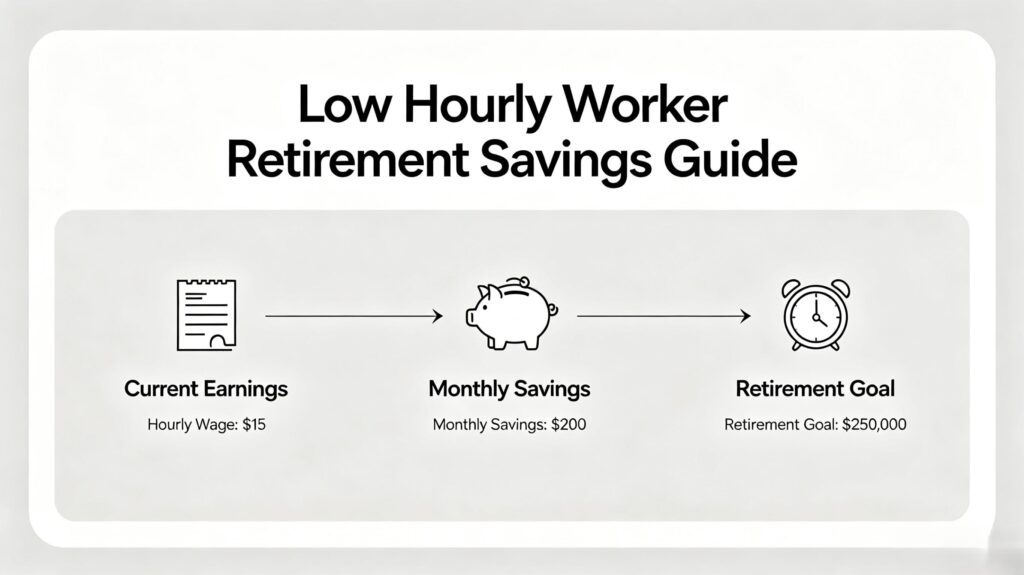
- Monthly $200 savings → $24,000 total portfolio threshold
- Monthly $300 savings → $36,000 total portfolio threshold
- Monthly $500 savings → $60,000 total portfolio threshold
The moment your account crosses this balance marker, your portfolio’s annual passive investment gains will exceed the full sum of cash you deposit from your paycheck over 12 months. From this turning point forward, your wealth expansion is driven primarily by market compound growth, not your limited monthly disposable income. Every subsequent year will widen the gap between passive portfolio gains and your manual savings contributions exponentially.
Official U.S. Treasury Validation Of Long-Term Compound Growth Math
The United States Department of the Treasury hosts free beginner financial education materials that confirm this predictable long-term compound growth behavior for ordinary low-budget savers: https://www.treasury.gov/education/tools/compound-interest. Official government guidance reinforces that steady, modest monthly deposits compound over decades to create exponential passive growth that far outpaces active manual savings efforts once the 120x balance threshold is achieved.
Why Low-Income Hourly Savers Require Longer Timelines To Hit The Compound Growth Turning Point
Hourly workers living paycheck-to-paycheck face one unavoidable disadvantage when chasing the milestone at what point does portfolio compound growth outpace monthly savings contributions: strict limits on how much cash they can allocate to investments each pay cycle. When your monthly investment budget is capped at a few hundred dollars, the timeline required to hit the 120x balance threshold naturally stretches out far longer than investors with large disposable income for lump-sum deposits.
Despite this longer waiting period, low-income savers hold two massive advantages over high-net-worth speculators targeting short-term market windfalls. Most hourly investors stick exclusively to zero-fee, low-expense broad market index funds that eliminate costly management charges eroding compound gains, and they maintain consistent multi-decade saving routines without emotional panic selling during market corrections. Wealthy investors frequently chase volatile high-risk assets and shift portfolios constantly, disrupting the steady compound growth timeline required to hit the passive gain threshold quickly.
The single costliest mistake low-wage savers make is abandoning consistent monthly deposits during the slow linear growth phase, just a handful of years before their portfolio crosses the critical 120x balance marker and switches to exponential self-sustaining expansion.
Practical Low-Budget Strategies To Reach The Compound Growth Threshold Years Faster
Even with a constrained monthly income, four simple, low-effort adjustments drastically shorten the waiting time to hit the turning point at what point does portfolio compound growth outpace monthly savings contributions, no large pay raise required:
- Prioritize consistent recurring monthly deposits over occasional one-time lump sums. Compound growth’s most powerful variable is time in the market, not the size of individual cash injections; even $100 automatic monthly contributions compound into substantial passive wealth over 25–30 years.
- Eliminate all high-fee investment accounts and actively managed funds. Administrative expense fees disproportionately eat away at compound gains for small portfolio balances, delaying the passive growth threshold by multiple years for low-income savers. Stick to no-expense broad market index funds exclusively.
- Gradually raise your automatic monthly savings rate whenever possible. Increasing your deposit amount by $50 or $100 per month shortens the timeline to hit the 120x balance rule drastically, without severe daily budget sacrifices.
- Avoid withdrawing investment funds for non-emergency expenses. Any early withdrawal resets your compound growth timeline and adds years before your portfolio generates more gains than your monthly deposits.
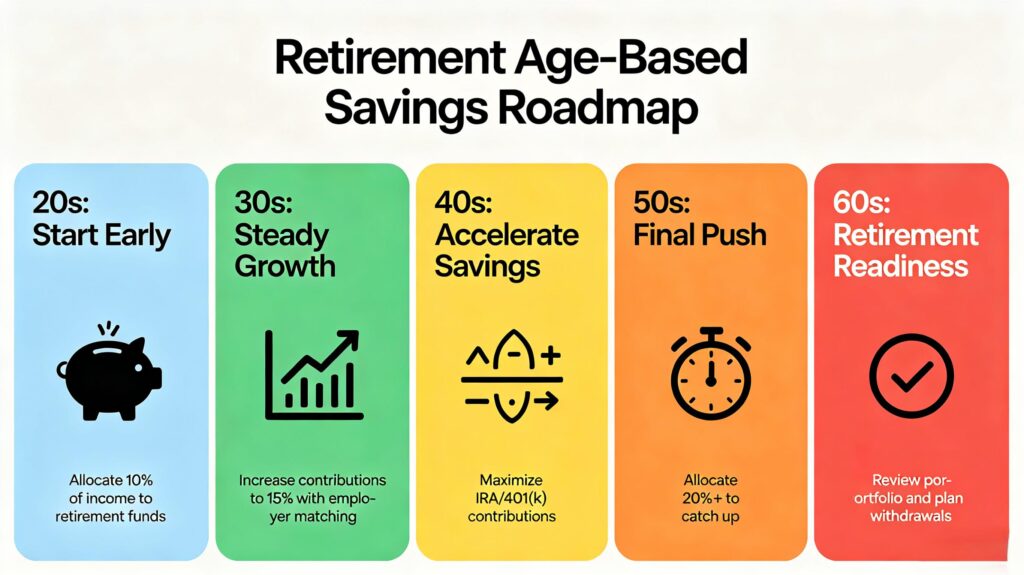
If you feel overwhelmed structuring a sustainable age-aligned retirement savings plan tailored to your hourly wage income bracket, follow a complete step-by-step guide built exclusively for low and middle-income working adults: How to Plan Your Retirement Savings at Any Age. This resource breaks down age-specific saving adjustments to accelerate your journey to the portfolio compound growth turning point.
Common Dangerous Misconceptions About Small Portfolio Compound Growth
New low-budget investors frequently buy into three pervasive myths that derail their progress toward the milestone at what point does portfolio compound growth outpace monthly savings contributions:
- Myth: Only large six-figure portfolios generate meaningful passive compound gains.
Fact: Compound interest mathematical rules apply identically to every portfolio regardless of starting balance. Small monthly deposits simply require a longer consistent timeline to cross the 120x threshold, with identical exponential growth mechanics activating once the balance marker is reached. - Myth: You need double-digit high-risk annual market returns for passive gains to beat monthly savings deposits.
Fact: Stable average 6%–7% broad index fund returns are more than sufficient to hit the compound growth turning point. High volatile short-term returns are unsustainable and introduce massive risk of balance loss that resets your multi-year growth timeline. - Myth: Starting retirement investing in your 40s or 50s means compound growth will never outpace monthly deposits.
Fact: Even mid-career savers over 40 can hit the 120x balance threshold before full retirement age with steady automatic monthly contributions, unlocking passive portfolio growth to supplement limited Social Security income later in life.
FAQ (Aligned With 4 Secondary Long-Tail Keywords)
Q1: How long for small portfolio compound growth to beat monthly deposits?
For consistent low-income hourly savers depositing $200–$500 monthly, it takes 7–12 years of unbroken investing to cross the 120x balance threshold where portfolio compound growth outpaces monthly savings contributions for low income hourly workers. Exact timeline shifts based on your deposit amount, market return consistency, and any temporary investment withdrawals.
Q2: Does compound interest work for low income hourly workers?
Yes, compound interest functions using identical mathematical formulas for every investor regardless of wage bracket. Low-income savers only face a longer waiting period to hit the passive growth milestone due to smaller monthly contribution limits, with no permanent barrier to exponential portfolio expansion.
Q3: What low budget retirement savings compound growth timeline should I target?
Aim to hit the 120x monthly deposit portfolio threshold within 10–15 years of starting consistent investing, adjusting your monthly savings rate incrementally to shorten this timeline as your disposable income rises over time.
Q4: Do index funds create the reliable portfolio turning point for passive growth?
Low-cost diversified index funds deliver the most steady, predictable average annual returns for ordinary low-income savers, creating a reliable compound growth timeline that consistently hits the 120x balance rule far more dependably than high-risk single stocks or actively managed high-fee funds.
Final Conclusion
Every low-wage hourly worker building retirement wealth on a tight budget can reach the transformative milestone answering at what point does portfolio compound growth outpace monthly savings contributions for low income hourly workers. The fixed 120x monthly deposit balance threshold marks the exact shift where your investment portfolio stops relying entirely on cash you earn and deposit manually, and begins generating self-sustaining passive wealth via compound market returns.
While the initial linear slow-growth phase feels unrewarding and discouraging for the first decade of investing, long-term patience is the greatest financial advantage regular working savers hold over wealthy short-term speculators. By maintaining automatic small monthly deposits, cutting avoidable investment fees, and following age-aligned low-income retirement planning strategies, any hourly employee can build a self-growing portfolio that fully secures their post-working life without endless paycheck sacrifices.
Once you cross this critical compound growth balance threshold, your entire retirement financial outlook shifts permanently — you stop trading every hour of labor for small savings deposits, and let decades of compound interest build lasting wealth for your future.
Disclaimer
This educational article is for personal budget and beginner investing guidance only. All portfolio growth threshold calculations rely on historical average broad market index fund returns; individual investment outcomes will shift due to market volatility, account fees, and changes to your monthly deposit schedule. This content does not constitute licensed professional financial advisory services.